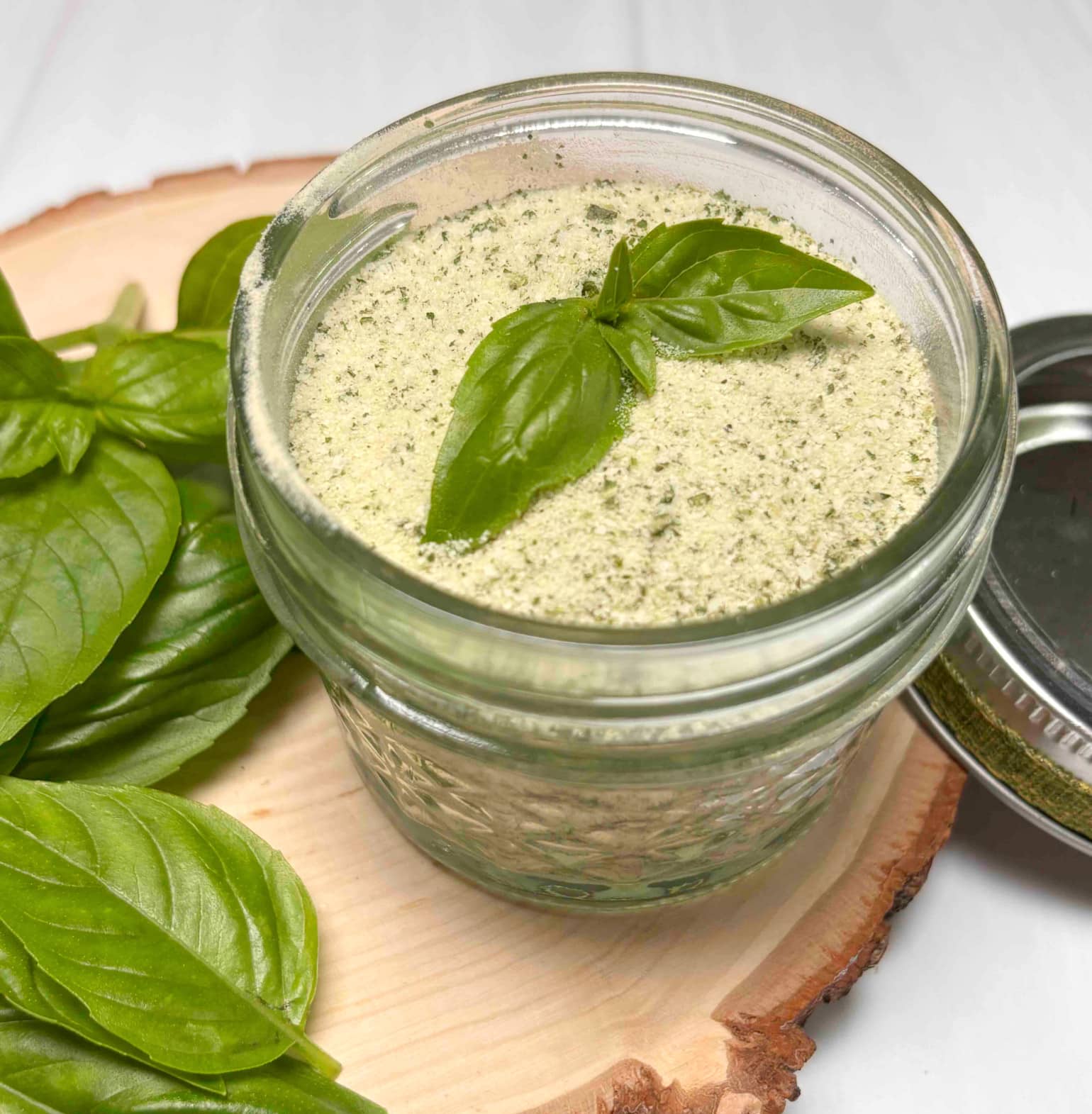
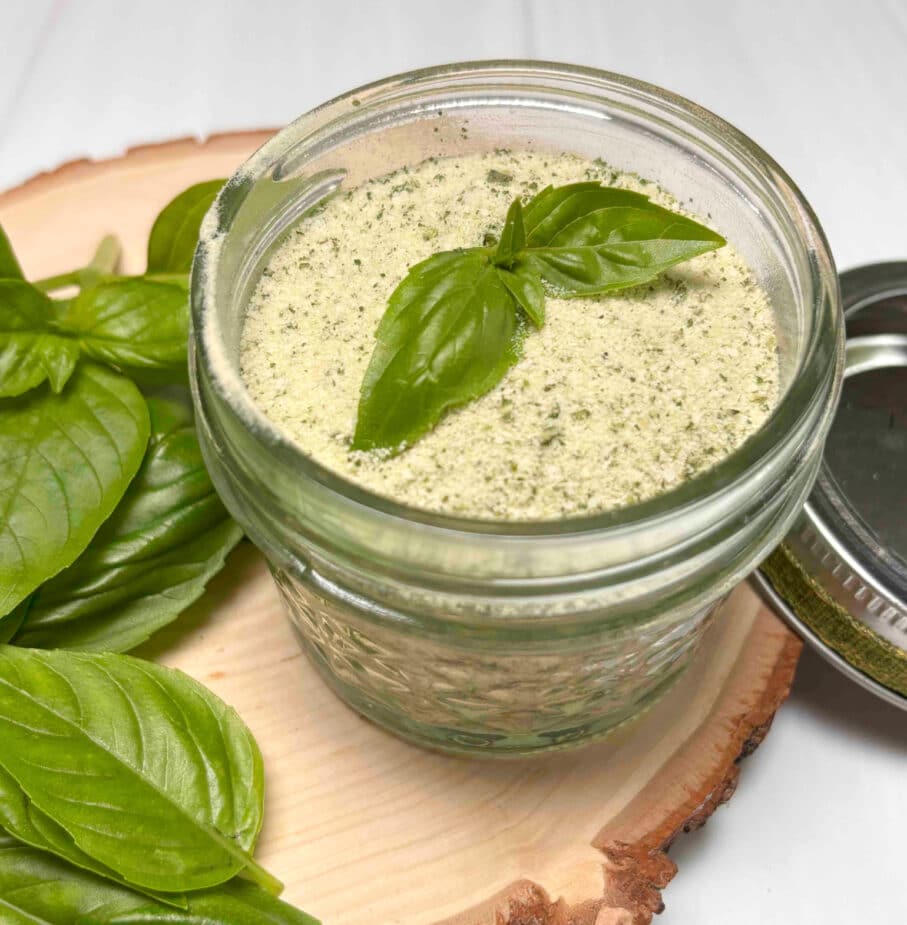
Last Updated on September 4, 2026 by Laura
Salt? Why is a healthy aging dietitian recommending a basil salt recipe? Isn’t salt something to avoid or limit? Yes, but… hear me out.
Salt has a number of functions in our food; one of the most important is adding or bringing out the natural flavor of food. For me, healthy eating isn’t about making every meal as low-sodium as possible or taking the flavor out of food. It’s about using ingredients strategically so that healthy foods are enjoyable and satisfying.
Note: this post may contain affiliate links. As an Amazon Associate, I earn on qualified purchases.
Why Make Basil Salt?
Herbs, spices, and acids (like citrus and vinegar) are tools for building flavor, and basil salt is one of those tools. A little herbed salt, like this homemade basil salt, can go a long way and really amp up the flavor of our meals.
The goal isn’t to turn salt into a health food or pretend that sodium doesn’t matter. For people watching their sodium intake, it’s still important to pay attention to how much salt they use overall. But concentrating salt with a strongly flavored herb means you can use a small amount as a finishing ingredient and get both the salty and basil flavor you’re looking for.
It’s also a simple way to capture that herbaceous summer basil flavor when the garden is overflowing, and enjoy it long after basil season ends.
What Type of Salt is Best for Infused Herb Salts?
This comes down to preference. I prefer Diamond Crystal Kosher Salt because its larger, lighter flakes make it easy to distribute throughout food. The crystals are less dense than many table salts and are larger. A teaspoon of Diamond Crystal contains less salt by weight, so volume-for-volume, you may use less sodium.
I also like that it doesn’t have additives like many table salts – it has a nice, clean flavor that really lets the basil stand out.
Now, with herbed salts like this basil salt, those large crystals have lots of nooks and crannies for the basil to cling to as it blends and dries.
Other salts that will work are large-crystal sea salt. But watch the flavor. If it has a very mineral flavor, that could interfere with the herb flavor you are looking for.
Basil to Salt Ratio
You may see a variety of ratios online with different amounts of herbs to salt. I’ve experimented with several ratios, and 2 parts salt to 1 part basil gives me the balance I like: enough basil that the herb is noticeable, without losing the familiar salty flavor that makes this useful as a finishing salt.
Pack the herbs tightly when measuring them so you get the full herb flavor.
How to Make Basil Salt
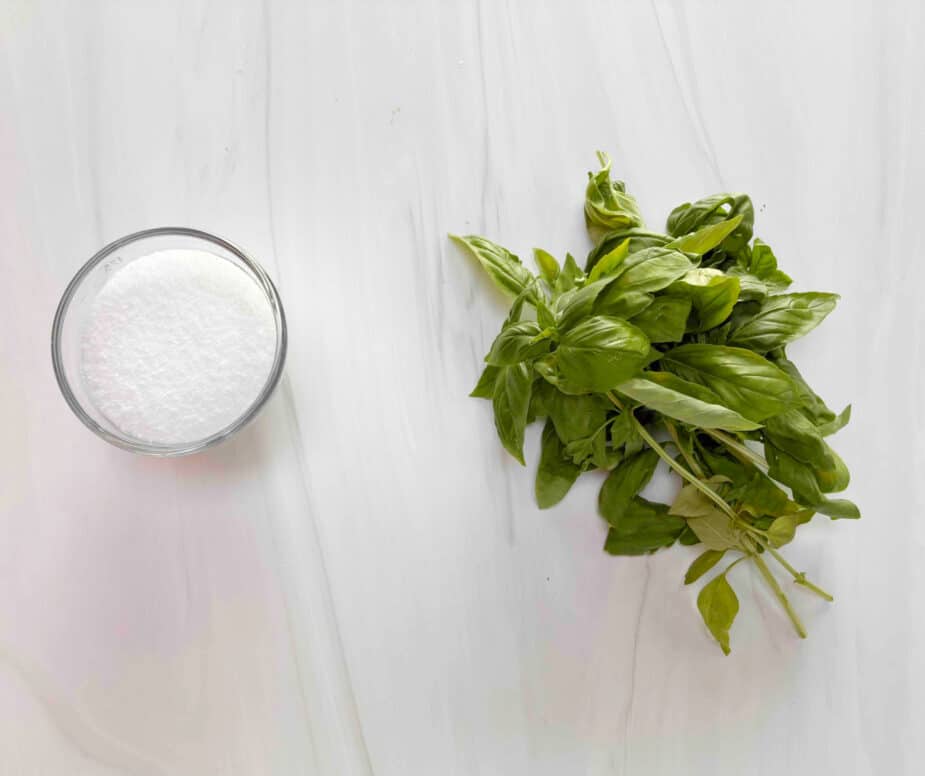
This simple process takes only 5-10 minutes of hands-on time. From start to finish it is a little over 2 hours, but that is mostly the drying/oven time.
Step 1
Wash your fresh basil well and allow it to dry. I wash my basil really well under cold running water. Then spin it in a salad spinner to get most of the water off the leaves.
After that, I lay it flat on a clean towel (paper or a clean cloth towel is fine) and let it finish air-drying.
Step 2
Once it is completely dry, place it in a food processor. I like to chop the basil first in the processor, scrape it down, then add the salt and finish chopping and blending.
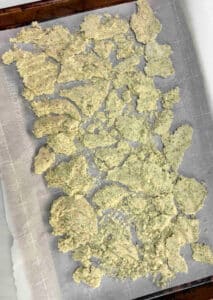
Spread it out in a thin layer on a parchment-lined baking sheet.
Step 3
Then place it in a low-temperature oven (around 200°F) and let it “bake” for 2 hours.
Remove it from the oven and let the salt cool.
Step 4
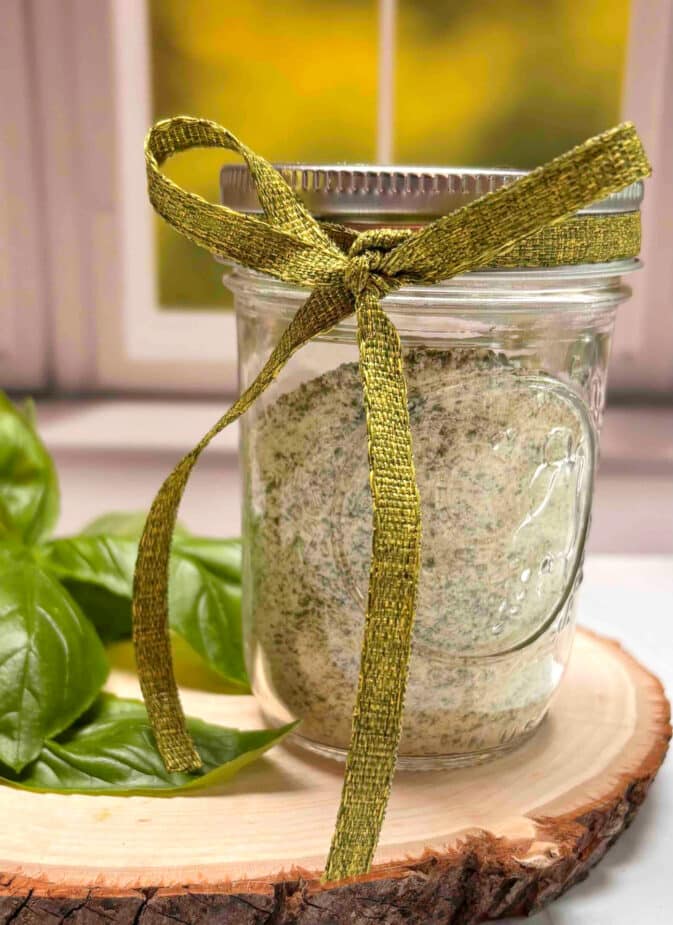
Pack it into a jar with a tight-fitting lid. Keep as much air out as possible so it will last.
Herbed salts can last up to a year – as long as the herbs are completely dried and there is no moisture in the jar.
These make great holiday and hostess gifts!
Note: If you have larger pieces of herbs in the salt, that is fine; you just didn’t get them chopped as finely as you could. If you like a real herby flavor and less salt, this is the way to go.
If you prefer the herbs to really blend in, you can run the mixture through the food processor after it has cooled to blend them more thoroughly. The salt will become much finer so you may end up using more salt in your recipes.
How to Use Basil Salt
Basil salt, and any other herbed salt, is best used as a “finishing salt.” This means sprinkling it on food after cooking to enjoy the full herbed flavor.
Salad dressings – Add herbed salts in place of regular salt into your vinaigrette recipes. This is a delicious way to amp up the flavor of vinaigrette dressings.
Seasoning proteins after cooking – Sprinkle over chicken, pork, seafood, or beef right before serving; it adds a nice burst of flavor
Salads – Lightly sprinkle on top of fresh mozzarella. (It is delicious lightly sprinkled on a caprese salad)
Morning Eggs – Add it to scrambled eggs or egg cups. You’ll use less salt and get a burst of herby flavor
Roasted Vegetables – Sprinkle roasted or grilled vegetables or potatoes with it just before serving for an herby burst of flavor in every bite.
Fresh Vegetables – Sprinkle just a bit over sliced tomatoes or cucumbers.
How Much Basil Salt to Use?
I’m not recommending adding MORE salt to your food. Basil salt is still salt, so it’s important to consider how much you’re using as part of your overall sodium intake. A small amount, added intentionally, can help make nutritious food that much more enjoyable.
And remember, a little basil salt goes a long way. A pinch sprinkled over your food just before serving is often all you need to add a beautiful, herby flavor.
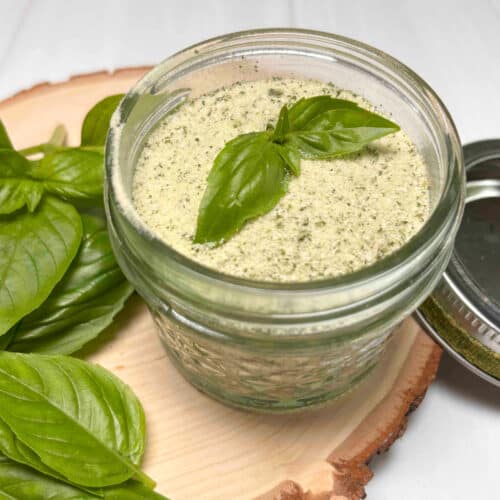
Homemade Basil Salt
Equipment
Ingredients
- ¼ cup packed fresh basil
- ½ cup kosher salt

Instructions
- Wash the basil really well under cold running water. Allow it to air-dry. Spin it in a salad spinner to remove as much moisture as possible. Then lay it flat on a clean towel to finish drying.
- Preheat the oven to 200℉. Line a sheet pan with parchment paper.
- Place basil in a food processor and process until finely chopped. Add the salt and quickly process to combine.
- Lay basil salt on the prepared sheet pan and spread it into a thin layer. Place it in the oven. Bake for 2 hours

- Remove from the oven and allow to cool. Pack into a jar that seals tightly.