
Last Updated on October 13, 2026 by Laura
With healthy aging, there is good news, and there’s bad news.
How we age depends, in part, on what we can control. The bad news is that how we age also depends on things that we cannot control. Genetics plays a real role, and so does our environment, but research consistently shows that our day-to-day lifestyle choices – especially what we eat – have the power to lengthen and improve our lives, regardless of the genetic hand we’re dealt.
What we eat, how active we are, how well we sleep, and how we manage our stress all cultivate healthy aging. I’m Laura, a registered dietitian nutritionist with over 30 years of experience. My focus is on helping you eat in ways that support your brain, your body, and your long-term health, without giving up the food you love.
I’ve always believed in a food-first approach. I don’t believe in restrictive diets, but I do believe that bringing delicious, nutritious food to the table is part of enjoying life, and it’s also the most sustainable way to eat for the long run.
Everything here is grounded in current research and guidance from peer-reviewed journals and established health organizations like the American Heart Association and American Diabetes Association.
That said, this guide is educational, not a substitute for personalized medical advice, so if you’re managing a health condition or taking medications, please loop in your doctor or a dietitian who knows your full picture.
Table of Contents
What is Healthy Aging?
When we think about healthy aging, each of us may have a different definition, but in general, I think it means being active and able to do what you want. Healthy aging could mean not having chronic diseases, or it could mean having chronic diseases that are well managed and not letting them interfere with your daily life.
I also think healthy aging means taking as few medications as possible (but don’t skip necessary medications for the sake of “being healthy,” either). Finally, I think it is important to contribute to society in a meaningful way and to foster your close relationships.
And what better way to build those relationships than by sharing a delicious, nourishing meal?
Let’s explore what healthy eating means through the lens of healthy aging. This conversation includes eating a variety of foods to ensure you get enough macronutrients like protein, carbohydrates, and healthy fats. It also means getting enough essential vitamins, minerals, and antioxidants that support and protect various aspects of healthy aging.
Let’s start with this year’s darling: protein.
Protein in Healthy Aging
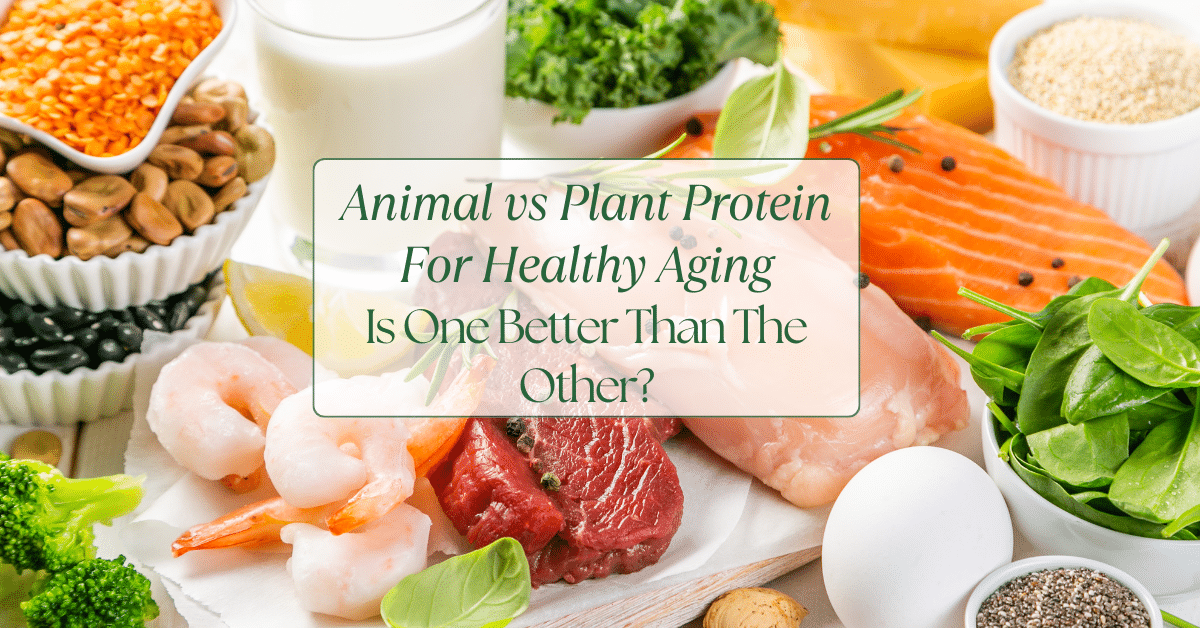
Protein is often highlighted as playing an important role in healthy aging. It helps build and repair muscles and keeps our bones strong. Those muscles we’re protecting aren’t just our biceps – they include our heart, lungs, brain, and even our digestive tract, so getting enough protein is critical for healthy aging from head to toe.
While most Americans get plenty of protein, it can become more challenging as we age. With our appetites decreasing, we can’t eat as much as we used to. Focusing on protein at every meal and snack helps ensure we meet our protein needs.
Brain Health and Healthy Aging
Our minds play a critical role in healthy aging. We can’t turn the clock backward – with age, our risk of both dementia and Alzheimer’s goes up. So, protecting our brain health is one important pillar of healthy aging.
This is where the MIND diet comes in. This eating plan combines the Mediterranean and DASH Diets and has a proven record of reducing the risk of dementia by as much as 53% – wowzah! (I’d like to see a prescription medication do that!) More impressively, even just following some of the principles of the eating plan reduces the risk by 35% – i.e., you don’t have to be “perfect” to get a big benefit. That is huge!
While it’s labeled a “diet,” it’s really a healthy eating plan. It isn’t restrictive, which I love, and still allows many favorite foods. It focuses on eating fruits (especially berries), vegetables (especially leafy greens), whole grains, beans and legumes, nuts, seafood, and olive oil.
Bone Health and Healthy Aging
As we age, our bones can become weaker and “brittle.” From infancy through our early 30s, we prioritize building our bones. Calcium, protein, vitamin D, and other vitamins, minerals, and hormones build bone structure. Think of these nutrients as the bricks, posts, nails, and screws that hold our structure (body) together and keep it strong.
For women, once we reach menopause and our estrogen levels plummet, we begin losing some of that structure, especially if we don’t prioritize protein-rich foods, calcium, and vitamin D. This can lead to osteopenia or osteoporosis.
Focusing on protein-rich foods, calcium, and vitamin D is the first step. Other nutrients like magnesium, vitamin K, and potassium also play an important role.
Heart Health and Healthy Aging
Heart disease is still the leading cause of death for both men and women in the U.S., and the risk climbs as we age. The good news is that heart health may be the easiest to improve through what’s on your plate.
A heart-healthy way of eating is a diet rich in fiber, healthy fats, and potassium, while lighter on sodium and saturated fat.
This is the foundation of the DASH diet, originally designed to lower blood pressure and still one of the best-studied eating patterns for cardiovascular health. It’s also a big part of why the MIND diet works as well as it does. Brain health and heart health benefit from many of the same nutritional principles.
What does that mean for you? Eat more fatty fish like salmon and sardines, use olive oil instead of butter, eat more beans and legumes, and eat produce with the skin on when you can.
The best part, though? None of this requires giving up flavor or eating bland “diet food.” Herbs, spices, citrus, and good olive oil do a lot of the work that salt used to.
Gut Health/Digestion and Healthy Aging
Digestion tends to get less attention than brain or heart health, but it deserves a seat at the table as we talk about healthy aging.
As we get older, our digestion often slows down. Stomach acid production can decline, and the type and amount of healthy bacteria in our gut tends to shrink, especially if our eating patterns simplify.
This matters because a healthy gut isn’t just about comfort after meals; it also supports immune function, nutrient absorption, and even mood and cognition through what researchers call the gut-brain axis.
The most reliable way to support gut health through food is variety and fiber. A wide range of plant foods, different colors, and different fiber types feeds a wider range of healthy bacteria than any single “superfood” can. This means that a side of steamed broccoli is super healthy, but a mixed side of broccoli, cauliflower, and carrots is even better – there’s more variety!
Fermented foods like yogurt, kefir, and sauerkraut can help too, though they work best alongside a generally fiber-rich diet rather than as a substitute.
If you’ve struggled with regularity, bloating, or other digestive changes as you’ve gotten older, know it’s common, you aren’t alone, and food is often one of the most effective solutions.
Blood Sugar and Healthy Aging
You may think blood sugar control is only something to worry about if you have diabetes, but managing our blood sugar is important with or without a diagnosis of diabetes.
Insulin sensitivity naturally declines with age, which means our bodies become less effective at managing blood sugar. Left unchecked, that can affect our energy, weight, heart health, and even brain health, since growing research links blood sugar swings to cognitive decline.
When we think about blood sugar, folks often assume that they’re never allowed to eat a dessert again – not true.
The goal isn’t to cut out carbohydrates. It’s to eat them in a way that keeps blood sugar steadier.
I like to think of blood sugar traveling through our body kind of like cars driving down the road. Sometimes we’re slowing down, sometimes we’re driving a little more slowly in the right-hand lane, and sometimes we’re speeding up and driving in the fast lane. Small changes up and down are normal.
The issue is traffic jams and too many cars on the road. Too many “cars” and your blood sugar spikes and when the jam releases, it drops quickly. The goal of blood sugar management is small rises and falls, not huge spikes or drops.
To do this, pair carbs with protein, healthy fats, and fiber. For example, instead of an apple by itself, have the apple with some peanut butter. Favor whole grains and legumes over refined starches, and avoid long stretches without eating. Movement matters here too; even a short walk after a meal can curb a blood sugar spike.
This is one area where small, sustainable changes beat dramatic overhauls. Swapping white rice for farro, or adding a handful of nuts to your afternoon snack, does more for long-term blood sugar stability than a strict low-carb diet you can’t maintain.
Recipes that Support Healthy Aging
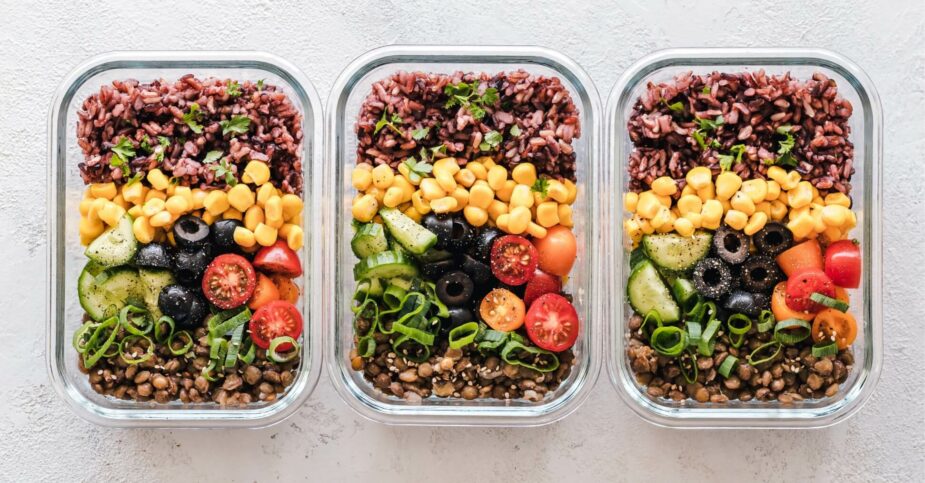
The foods I encourage for healthy aging are rich in fruits and vegetables and include beans, nuts and seeds, whole grains, seafood, and lean meats and poultry. Here are some of my favorite recipes that support healthy aging.
Breakfast

Salads

Lemon Arugula Salad with Quinoa and Chicken
Grilled Peach Salad with Arugula and Walnuts
Strawberry Kiwi Salad with a Lemon Yogurt Topping
Soups
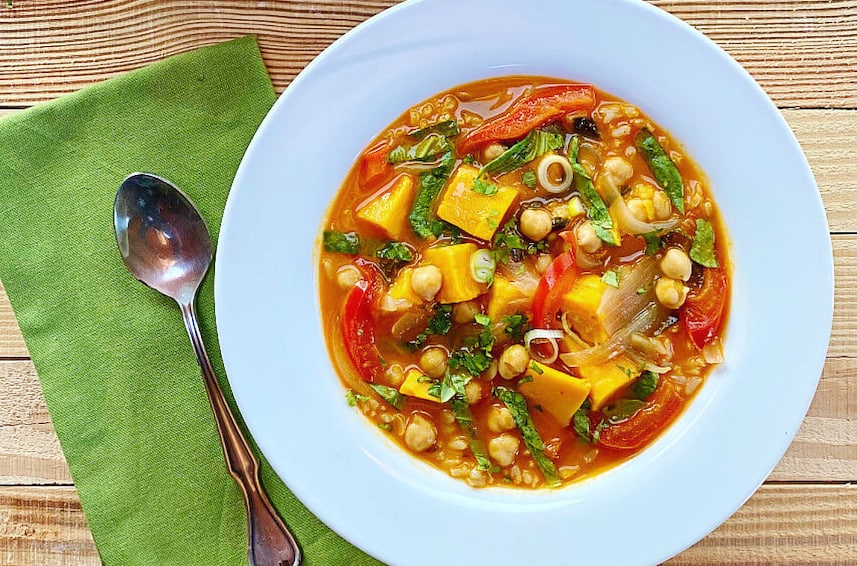
Lemon Chicken and White Bean Soup
Spicy Sweet Potato and Chickpea Soup with Thai Curry
Weeknight Chicken Tortilla Soup
Entrees
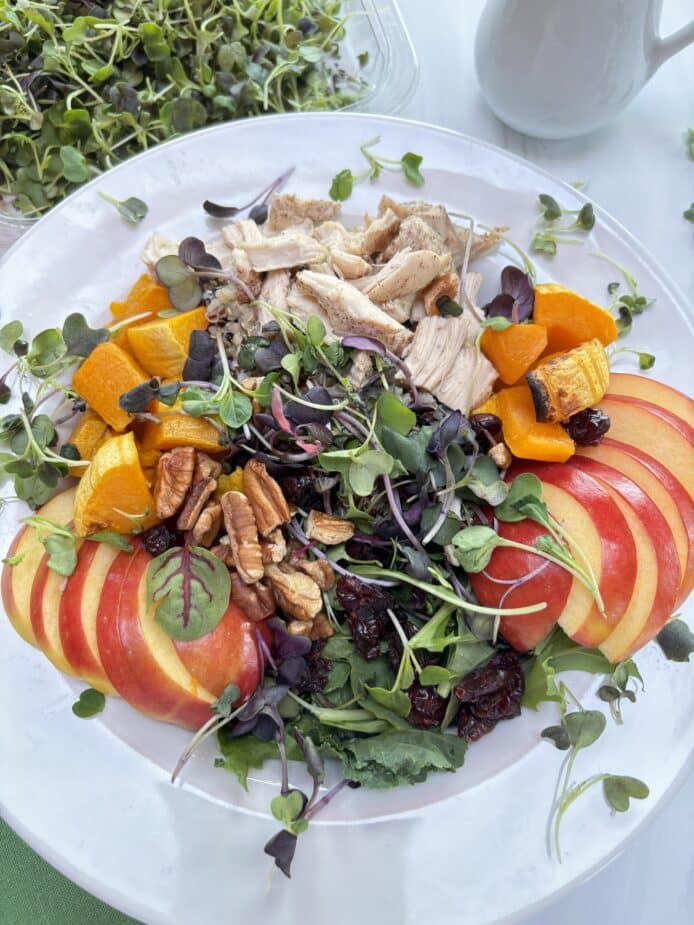
Salmon and Brown Rice Casserole
Side Dishes
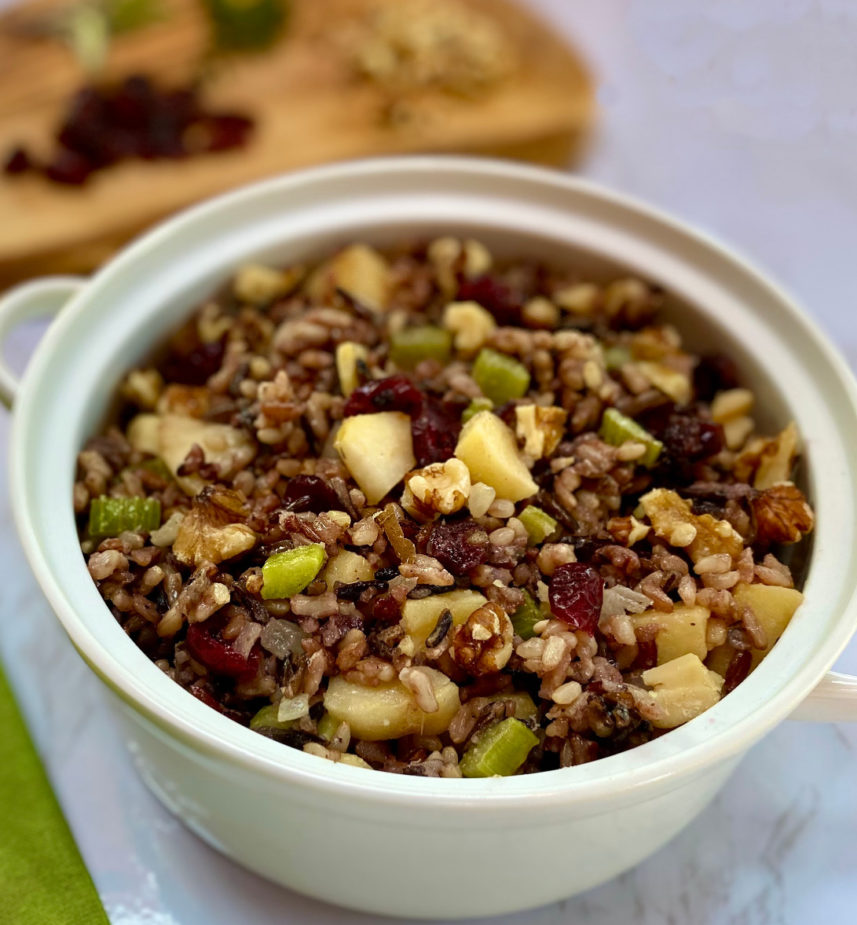
Roasted Maple Brussels Sprouts
Snacks

Desserts
Frequently Asked Questions/ FAQs
Eat a varied diet rich in fruits, vegetables, whole grains, and at least 2 servings of seafood a week. Also include low-fat dairy foods, beans and legumes, and nuts and seeds. Choosing a variety from all of these groups is the best bet for healthy aging.
The Dietary Guidelines for Americans recommend 1.2 to 1.6g of protein per kg of body weight for all healthy adults, including those over 50. What does that mean in everyday language? Most average-weight adults (between 130 and 175 pounds) should eat 70 to 125g of protein per day.
The MIND diet isn’t only for preventing dementia. It is an overall healthy, nutrient-rich eating plan that also helps reduce the risk of heart disease and stroke and supports a healthy GI tract, immune system, and blood sugar.
The DASH diet is a healthy eating plan, but it also focuses on nutrients that help lower blood pressure. It encourages lower sodium intake and more potassium-, calcium-, and magnesium-rich foods.
Like other parts of our body, our GI tract slows down as we age. Our stomach produces less acid, which helps break down food, and the bacteria that line our GI tract and help us absorb nutrients are less diverse than they were when we were younger.
Final Thoughts
When it comes to healthy aging and nutrition, the same simple, balanced advice applies.
Focus on eating fruits, vegetables, whole grains, beans, seafood, and other lean proteins. Have low-fat dairy (or a dairy substitute) at least 2-3 times a day, and use healthy fats. Limit fried foods and sweets. (Notice I didn’t say to avoid them!)
Enjoy your meals with family and friends, get plenty of exercise, and get plenty of sleep.
If you want help planning meals that meet these guidelines, download my 7-day MIND Diet meal plan and join my community for monthly tips and recipes.