
Last Updated on October 15, 2026 by Laura
Table of Contents
How we age depends on both what we can control… and things we can’t. While genetics plays a big role, we’ve learned there are many things we can do to lengthen and improve our lives as we age.
Certainly, what we eat plays a big role in healthy aging, and protein is a key factor. But does the type of protein we eat matter? Is one source better than others?
Hi, I’m Laura Ali, a Registered Dietitian and culinary nutritionist. You’re probably hearing a lot about plant protein these days and how it may be better for long-term health and sustainability. You may also be hearing that animal protein is good and, in some ways, better. Who’s right? Let’s dive into the science behind both protein sources and aging, along with tips for including them in your diet.
What is Healthy Aging?
Healthy aging means different things to different people, but to me, as a registered dietitian focused on healthy aging, it means being free from disease, taking minimal medications, and having the strength and energy to do the things you want.
When it comes to protein, both sources are helpful, but plant proteins shine brighter. Plant proteins are most often associated with a reduced risk of chronic disease. It doesn’t need to be all or nothing, though. Replacing some animal protein with plant protein helps too.
Why Protein Matters More as We Age
Protein helps preserve muscle mass, supports heart health and brain health, and reduces the risk of chronic disease. Getting enough protein as we age helps preserve our physical function. While it may not seem as pressing in our 50s and 60s, it becomes more important as we get older.
I notice it most vividly in my mom. She’s a pretty healthy 90+-year-old, but she struggles to get enough protein, and I’m slowly watching it take a toll. I notice a loss of muscle mass and a decline in her strength. This affects everything from climbing the stairs to just walking down the hall.
Focusing on protein in our middle ages and into our 60s and 70s can help preserve that muscle mass as we age. Plus, it becomes a habit and will be easier to sustain later in life. But is all protein created equal? Are some sources better than others? Maybe. Let’s look.
Animal vs. Plant Protein – What’s the Difference?
Many types of protein are available, but they fall into two buckets. Either an animal protein or a plant protein. Both are good sources of protein, and each has its own advantages (and a few disadvantages, too).
Animal Protein
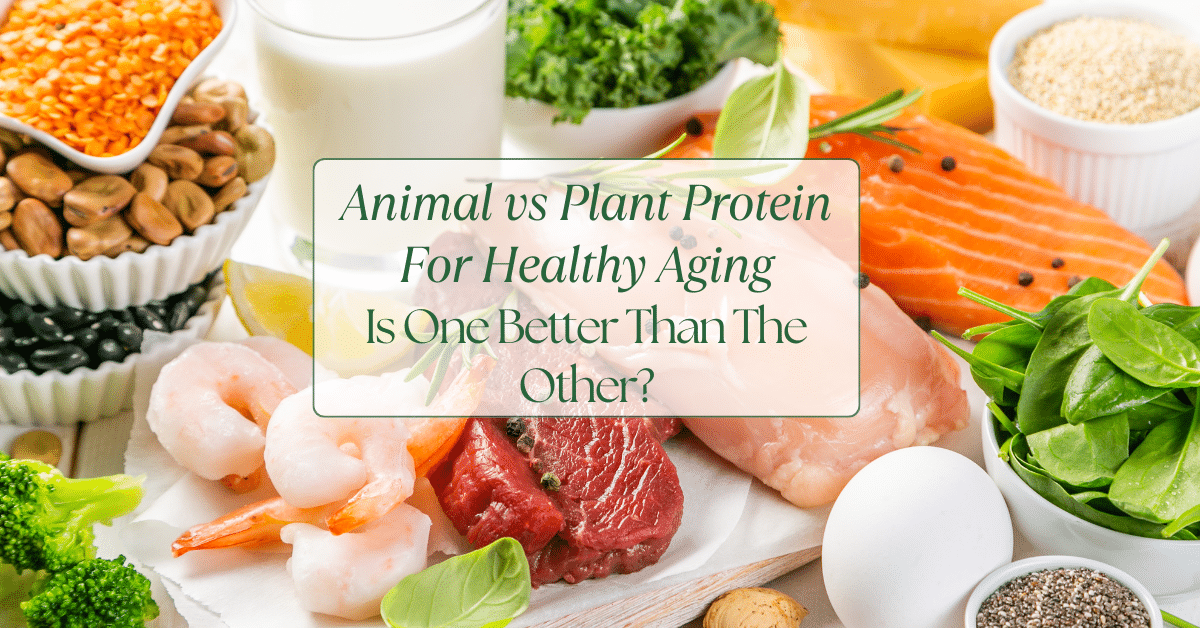
Animal protein is found in eggs, meat, pork, poultry, fish, and dairy products. Some protein supplements contain whey, a dairy by-product of the cheese-making process.
Pros: Animal protein
Animal proteins are complete proteins, containing all the essential amino acids our body needs, and they are highly absorbable. This means that your body breaks the protein into easily digestible amino acids. Between 90 and 100 percent of the protein in the food is broken down into amino acids and absorbed. So you get a lot of bang for your buck.
Cons: Animal protein
Animal proteins can be high in saturated fat and cholesterol, which can negatively impact heart and brain health. Lean proteins like chicken breast, lean or extra-lean cuts of beef, pork loin or pork tenderloin, and low-fat or fat-free dairy products can help reduce saturated fat and cholesterol.
Plant Protein
Plant protein is found in beans, nuts, seeds, soy products, vegetables, and whole grains.
Pros: Plant protein
Plant proteins are also high in fiber and low in saturated fats. They don’t break down as easily into amino acids in the digestive system, and with a few exceptions like quinoa and soy, they don’t contain all the essential amino acids.
Cons: Plant protein
Some plant proteins contain “anti-nutrients” which can interfere with or block the absorption of some amino acids.
There are a few things you can do to increase the digestibility of plant-based protein, including soaking beans overnight and cooking grains and seeds.
Does Plant Protein Have an Advantage for Healthy Aging?
Protein is critical to our health and involved in nearly every aspect of life, but is one type better than another?
What About Muscle Health?
Animal proteins generally have an advantage in digestibility and essential amino acid content, particularly leucine. Leucine is essential for repairing and rebuilding muscles, and it becomes even more important as we age, as our muscles become somewhat resistant to protein and we need more than we did when we were younger.
That matters because preserving muscle mass as we get older helps us retain mobility and strength.
Prioritizing foods with leucine can help support your muscle health. While animal proteins tend to win out in this category, plant proteins can certainly help meet those needs, especially when you are eating enough total protein.
Foods including chicken, seafood (tuna and salmon), cottage cheese, eggs, tofu, navy beans, and whey protein powder all contain leucine.
What About Heart and Brain Health?
Plant proteins may have a slight advantage here as they come with other beneficial vitamins and minerals that support heart and brain health and are low in saturated fat and cholesterol.
These protein sources are rich in fiber, polyphenols, antioxidants, healthy fats, vitamins, and minerals. They’re often part of dietary patterns associated with better cardiovascular and cognitive health, including the Mediterranean, DASH, and MIND diets.
A fiber-rich diet is associated with a healthy GI tract, which is increasingly thought to support brain health and better cognition. Eating more fiber also helps lower LDL cholesterol, reducing your risk of heart disease. You can read more about fiber’s role in healthy aging here.
The polyphenols and antioxidants reduce inflammation and support brain health.
Lean cuts of beef and pork, chicken and turkey breasts, eggs, and lower-fat dairy are also good protein choices for supporting your heart and mind.
Remember: What’s good for your heart is often good for your brain, too.
What About Chronic Disease?
As we age, the risk of other chronic diseases that can impact our quality of life grows.
Osteoporosis, cancer, and gastrointestinal diseases become more common. Both types of protein can help support your overall health when it comes to managing some of these issues.
Dairy protein, along with getting adequate protein in general, helps support your bones. Plant proteins rich in fiber support digestion, and all types of protein support overall health.
So, which is better? Neither one wins outright. Animal proteins may have an advantage in protein quality and supporting muscle, while plant proteins bring fiber and other compounds that support overall health.
The question isn’t really which is best, but getting enough protein and a good variety of protein, whether animal, plant, or a combination of the two (my preferred option). For healthy aging, there’s room for both types of protein.
I recommend focusing on the least processed protein choices, including plant and animal protein.
Why the Food You Choose Matters More Than the Protein “Label”
Many foods, from whole foods to more processed, fall within each protein category. Just because one is made from plants doesn’t necessarily make it healthier than an animal protein and vice versa. Let’s take a look at some of the types of foods within each category.
Animal proteins can include:
- Salmon
- Sardines
- Greek yogurt
- Cottage cheese
- Eggs
- Chicken
- Lean beef
- Processed meats
- Beef Jerky
Plant protein
- Lentils
- Beans
- Tofu/tempeh
- Edamame
- Nuts and seeds
- Whole grains
- Plant-based meat substitutes
- Processed meat and dairy substitutes
One is not necessarily healthier than another. For instance, both salmon and bacon are animal proteins, but they aren’t nutritionally equivalent. Salmon has healthy fats, vitamin D, and other important nutrients, while bacon is high in saturated fat and sodium. Both are animal proteins.
And consider plant proteins. A vegetarian chili made with beans and vegetables is loaded with nutrients like fiber and antioxidants, while a plant-based burger made to taste like beef could be highly processed and high in fat, sodium, and even sugar.
Considerations When Eating Plant Proteins Exclusively
What you eat every day matters more than the type of protein you choose.
Mediterranean-style plant-focused meals that include legumes, nuts, seeds, whole grains, vegetables, and soy foods will provide all the amino acids and high-quality protein you need.
Yes, while plant proteins contain most of the essential amino acids, they may be lacking in one or two. By eating a variety of plant proteins throughout the day, you will likely get all the amino acids and all the protein you need.
We used to believe you needed to combine plant proteins in the same meal to get all the essential amino acids and have them work effectively. That is really outdated advice. It doesn’t matter when you eat the different types of plant proteins, just that you are getting a variety throughout the day to maximize the benefits.
How Much Animal vs Plant Protein Should You Eat?
Both animal and plant proteins are associated with improvements in healthy aging, including a lower risk of chronic disease, improved physical function, and better mental health later in life.
Everyone’s protein needs vary. The most recent Dietary Guidelines for Americans suggest that an adequate protein intake for a healthy adult is between 1.2 and 1.6g/kg. Now, so you don’t feel like you need to be a math major, what that means in real life is that if you weigh 140 pounds (64 kg), you would need between 76g and 102g of protein per day.
Most Americans get plenty of protein, but shifting the balance of protein sources may help as we get older.
- Add more beans, peas, lentils, nuts, and seeds.
- Experiment with adding some soy foods to your routine.
- Include at least two servings of fish a week.
- Select mostly lean meats and poultry.
- Follow a Mediterranean, DASH, or MIND diet style of eating most of the time.
How to Get Enough Protein Without Overthinking It (or Overdoing It)
Yes, protein is important, but so are the other nutrients. We don’t need to overdo protein and miss out on the rest of what our bodies need.
A simple formula to help you prioritize protein while still getting all the other nutrition you need to support your health may look like this.
Protein + Plants + Grains + Healthy Fats + Flavor
Some ideas for how to build meals that I love:
- Chicken + roasted vegetables + farro + lemon vinaigrette (like this Ancient Grains Bowl)
- Greek yogurt + mixed berries + granola with nuts
- Shrimp + spinach and tomatoes + pasta + pesto (Mediterranean Shrimp Pasta)
- Egg + avocado + whole grain toast + roasted chickpeas (add an egg to this avocado toast)
- Chicken and white beans + carrots and spinach + orzo + chicken broth (Lemon Chicken and White Bean Soup)
Bottomline
Don’t think of protein as “animal vs. plant” or that one is better than the other. Both animal and plant proteins can play an important role in healthy aging. Balance is key, and make sure you are getting enough protein, regardless of the source.
Start by including a protein source at each meal, and add small protein-rich snacks if needed.
Then consider the type of protein and add more plant sources like beans, nuts, and seeds to your meals. Add in lean meats, fish, low-fat dairy foods, and eggs, and choose fewer highly processed protein options.
It’s not all or nothing, but choosing a variety of high-quality, nutrient-rich protein sources throughout the week will help keep you healthy and support your overall health goals as you age.